News

485922966_1085780193577270_7868123788743456943_n


THE 13th INTERNATIONAL SYMPOSIUM

ON TRADITIONAL POLYPHONY

23– 26 September, 2026, Tbilisi, Georgia

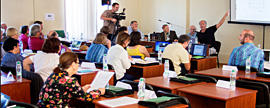
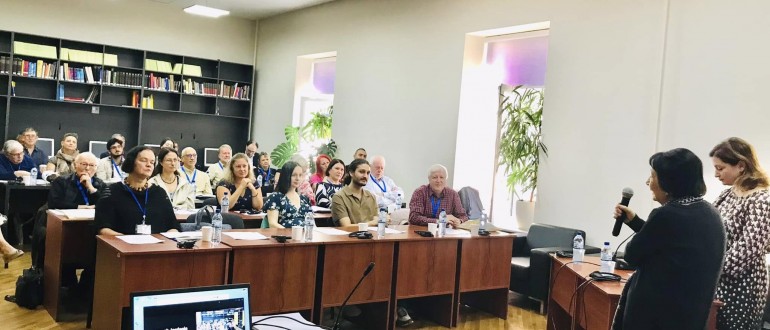
International Research Centre for Traditional Polyphony of Tbilisi State Conservatoire and Anzor Erkomaishvili Folklore State Centre are inviting scholars working on the problems of polyphony to the 13th International Symposium on Traditional Polyphonic, to be held on September 23- 26, 2026.

One of the features of the symposium is the diversity of themes, which is allowed for by the interdisciplinary character of ethnomusicology.

Official languages of the Symposium are English and Georgian. All the papers will be published after the symposium in both English and Georgian.

Complete information including the history of previous symposia, information on the participants, contents of the bilingual books of proceedings with full texts of all symposium papers and further information about the International Research Center for Traditional Polyphony of Tbilisi State Conservatoire is available at: www.symposium.polyphony.ge


Topics of the Symposium:

Participants are encouraged to submit abstracts on all aspects of traditional polyphony. The submitted papers will be grouped according to the themes and issues discussed in them and will be presented at the corresponding session. This will allow for better covering wide range of the issues of polyphony.


Along with traditional areas of interest, we would like to present one new topic at the 13th symposium:

The Role of Artificial Intelligence (AI) in Various Formats of Researching Traditional Music

Proposed for discussion is a new topic on how artificial intelligence tools and methods (including machine teaching, big data analysis and automated transcription systems) can be used in researching traditional polyphony.

Attention may be drawn to the following issues:

  1. Automatic transcription and Analysis: Application of AI for accurate transcription of vocal polyphony recordings, automatic identification and comparison of musical structures, regional styles, melodic and rhythmic features.
  2. Bid Data Analysis: the ability of AI to analyze numerous archival polyphonic recordings, to reveal lesser-studied connections, evolutionary trends, and interregional influences, thus providing new insights into traditional music.
  3. New methods of ethnomusicological research: how AI changes the research methods of ethnomusicologists; whether it creates new ethical issues in terms of data processing and the protection of cultural heritage.
  4. AI and composition/revival: prospects for using artificial intelligence to restore lost or damaged polyphonic examples or to create new polyphonic material while preserving traditional styles.
  5. Training and educational programs: how AI-based tools can be integrated into the teaching process of polyphony, providing for deepening performers’ and listeners’ knowledge.

This topic will allow symposium participants to engage in a discussion on the application of technological advances in preservation and understanding of cultural heritage.


Traditional themes of the symposium:

  1. General Theory, History, and Musical-Aesthetic Aspects of Polyphony

The topic considers a wide range of general problems of polyphony, characteristic of contemporary cultural anthropology.

  1. Regional Styles and Musical Language of Traditional Polyphony

The theme unites wide range of regional studies of polyphonic singing styles, encompassing huge regions as well as in-depths studies of a small region, ethnic minority, or village.

  1. Comparative Study of Traditional Polyphony

It is impossible to have a comprehensive understanding of the phenomenon of traditional polyphony without a comparative approach. We invite scholars to work on the development of new methodologies in this direction.

  1. Sociological Aspects of Traditional Polyphony: Performers and Listeners; Gender, Age, Identity.

A wide range of topics on different aspects of social life of traditional communities is covered under the theme. These problems will be viewed in relation to contemporary life and from historical perspectives.

  1. Polyphony in Secular and Sacred Music

Interactions between traditional polyphony and early forms of professional polyphony in various European countries are main topics of this theme, although papers dedicated to other regions and time span are also welcome.

  1. Traditional Instrumental Polyphony

. Although the symposium mainly focuses on vocal polyphony, various interaction aspects of vocal and instrumental polyphony might be discussed within the framework of this theme.

  1. World Music and Traditional Polyphony

“World Music” expresses the aspiration of different cultures towards harmonization. The idea of the “Global Village” confirms universal character of music. Those interested study vocal traditions of “other” cultures in situ; traditional singers are invited to teach in other countries. What is lost or gained in this process?


Round table:

Social Function of Traditional Music in Contemporaneity

Traditional music, which has been an integral part of peoples’ life mode since ancient times, has not lost its relevance in modern epoch, although it has acquired a different social significance. Its social function is rapidly changing and becoming as comprehensive as the reality in which this music exists.

Today, traditional music can be found everywhere — in music therapy, cultural tourism, the media, social media and marketing, in transformed feast, vocational training, etc. Under increased migration, in a new cultural and geographical space, it has become a powerful symbol of identity.

All this has significantly expanded the scope of the social function of traditional music, which is also reflected in new ethnomusicological research. At the round table we suggest to discuss the social function of traditional music from this updated perspective.

Proposals

The Program Committee encourages submission of individual, panel, and round-table proposals:

  • Individual paper will be allotted up to 20 minutes followed by 10 minutes for questions and discussion[1];
  • A panel presentation includes two or three papers, 20 minutes each, followed by a 10 minutes’ discussion;
  • A round table session (up to 2 hours) includes no more than four presenters (10 minutes each). The audience is encouraged to participate in the discussion.


Abstracts, short biographies and complete papers

Abstract and short biography – both texts no more than 1800 characters wish spaces (should be inserted in the online registration form).

Complete text of papers: no more than 7 pages, font – Sylfaen, size – 12, spacing – 1.5, reference – APA style

 TIMELINE

Deadline for online registration: 1 April, 2026

Notification of acceptance: by 1 May, 2026

The deadline for submitting complete text of the presentation, considering the time required for translation: 1 July, 2026

Registration fee

For scholars – 80 USD

For students – 30 USD


The costs of accommodation and cultural program will be covered by the Organizing Committee of the Symposium.

The organizing side plans a one-day cultural program for the participants – a visit to one region of Georgia.

The Tbilisi International Symposium is not only a scientific forum on the issues of traditional polyphony. The symposium will see performance of the ensembles from Georgia and other countries of the world, performing their polyphonic music.


The Program Committee

Dr. Rusudan Tsurstumia (Georgia)

Dr. Joseph Jordania (Australia-Georgia)

Dr. Izaly Zemtsovsky (USA-Russia)

Dr. Maka Khardziani (Georgia)

Dr. Teona Lomsadze (Georgia)

Dr. Natalia Zumbadze (Georgia)

Dr. Nino Tsitsishvili (Australia-Georgia)

Dr. Daiva Raciunaite-Vyciniene (Lithuania)

Dr. Caroline Bithell (UK)


Contact information for Symposium participants

Senior specialist Ana Lolashvili: polyphony@tsc.edu.ge

Ethnomusicologist Joseph Jordania: josephjordania@yahoo.com.au


[1] Given the potentially large number of participant scholars, the speakers are expected to be allocated 15 minutes for presentation and 5 minutes for questions and answers.
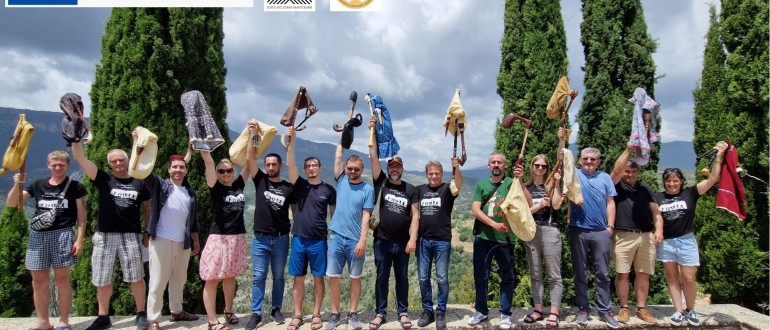
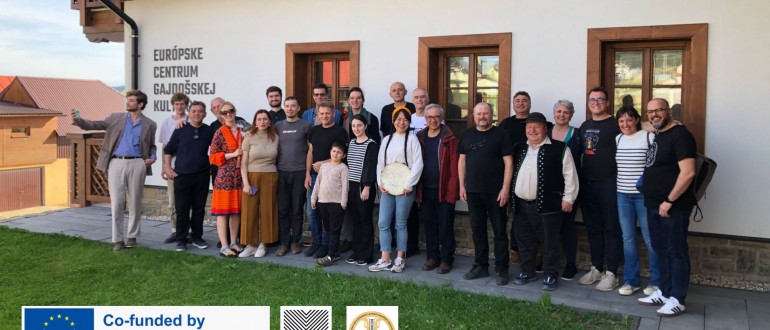
Photo-Spain


The two-year project “The Network of European Bagpipers” is implemented by the Erasmus+ program and unites the representatives of 6 countries. The aim of the project is to safeguard and to promote specific part of ICH (bagpipes playing and making tradition).

In the framework of the project, on June 5-10, the director of the Research Center for Polyphony, Nino Razmaze, and bagpiper player Levan Berelidze visited Spain. They got acquainted with the technology of making Spanish bagpipes and the traditions of its performance.

The project was completed, which meant visiting the representatives of all six countries, making the bagpipes and promoting the tradition of playing it.


Project partners are:

• Suiti Cultural Heritage Foundation (Latvia) – Coordinating partner;

• Centre of Croatian traditional instruments (Croatia);

• Associazione culturale Multietnica (Italy);

• Asociación Gaiteros de Graus (Spain);

• Cech slovenskych gajdosov (Slovakia);

• Sarajishvili Tbilisi State Conservatoire (Georgia)

See the booklet

Photo-Slovakia-1


The project “The Network of European Bagpipers” is being implemented under the Erasmus + program, in which representatives of 6 countries (bagpiper performers, masters and researchers) are united. The project is two years long and its goal is to promote a specific part of intangible cultural heritage (ICH) – the tradition of making and playing bagpipes.
Within the framework of the project, the representatives of the Polyphonic Research Center and the bagpiper player Murad Tavartkiladze participated in the training events held in Slovakia. Project participants from six partner countries (Georgia, Croatia, Spain, Italy, Belarus and Latvia) got acquainted with the Slovak bagpipes and other traditional musical instruments common in Slovakia, as well as training meetings on intangible and tangible cultural heritage. Within the framework of the project, we met the masters of traditional instruments, got acquainted with the technology of making Slovak Bagpipes and the traditions of performing it.
The project is ongoing, which involves visiting the representatives of all six countries, promoting the tradition of making and playing the bagpipes. The last visit of the project to Spain is planned in June of this year.
Project partners are:
  • Suiti Cultural Heritage Foundation (Latvia) – Coordinating partner;
  • Centre of Croatian traditional instruments (Croatia);
  • Associazione culturale Multietnica (Italy);
  • Asociación Gaiteros de Graus (Spain);
  • Cech slovenskych gajdosov (Slovakia);
  • Sarajishvili Tbilisi State Conservatoire (Georgia)

See the booklet

245659423_5062066493820855_1276302796932272203_n


THE 12th INTERNATIONAL SYMPOSIUM

ON TRADITIONAL POLYPHONY

25– 28 September, 2024, Tbilisi, Georgia

International Research Centre for Traditional Polyphony of Tbilisi State Conservatoire and Anzor Erkomaishvili Folklore State Centre are inviting scholars working on the problems of polyphony to the 12th  International Symposium on Traditional Polyphonic, to be held on September 25- 28, 2024.

Read More

admin-ajax


The project “The Network of European Bagpipers”  is implemented by the Erasmus+ program and unites the representatives of 6 countries. (Bagpiper performers, masters and researchers) The project is two years long and aim of the project is to safeguard and to promote specific part of ICH (bagpipes playing and making tradition).

As part of the project, Bagpiper performers visited Georgia and Italy. They get acquainted with the technology of making Bagpipes and the traditions of its performance. The project is continuing, which involves visiting the representatives of all six countries, promoting the tradition of making and playing the Bagpipes.

Project partners are:

  • Suiti Cultural Heritage Foundation (Latvia) – Coordinating partner;
  • Centre of Croatian traditional instruments (Croatia);
  • Associazione culturale Multietnica (Italy);
  • Asociación Gaiteros de Graus (Spain);
  • Cech slovenskych gajdosov (Slovakia);
  • Sarajishvili Tbilisi State Conservatoire (Georgia)

See the booklet


Introduction to Computational Ethnomusicology

A 3-days, hands-on workshop in Tbilisi

Sep. 20-22, 2023

Lecturer team: Frank Scherbaum, Nana Mzhavanadze,
David Shugliashvili, Levan Shugliashvili


Computational ethnomusicology (CE) is the application of computer science and computational methods to the study of music in diverse cultural contexts. It aims to analyze, represent, and understand musical traditions and practices through the use of computational tools and algorithms, such as machine learning and data analysis. The goal of computational ethnomusicology is to enhance the understanding of music across cultures and to provide new insights into the structure, meaning, and social aspects of music.


The aim of this three-day workshop is to provide basic practical experience in the use of computer tools for the study of Traditional Georgian Vocal Music. The central theme of the workshop will be the “Analysis of the tonal organization (tuning system) from audio recordings”.


The first day will consist of a crash course on the state-of-science regarding the acoustic and perceptual properties of sound, with special emphasis on “pitch” and “pitch determination”. For  the second day, it is planned that participants will make their own recordings of a Georgian three-part song, which will then be analyzed from different perspectives. On the third day, the results of the analysis of the recording experiment will be discussed, and finally, selected past and current projects on the study of traditional Georgian music using computer tools will be presented.


The workshop is intended for participants with basic computer skills who can bring their own computer (as well as headphones) and the willingness to engage with a highly interdisciplinary topic that touches upon music, acoustics, ethnomusicology and computer science. The workshop is limited to a maximum of 10 participants. To apply to participate, please send

  1. a) an email with your resume (CV) and
  2. b) a letter explaining your motivation and experience to fs@geo.uni-potsdam.de and polyphony@tsc.edu.ge not later than May 31, 2023.


476597229_1054233543398602_4850002665455336500_n


On April 1-6, the Tbilisi State Conservatory will host a delegation of bagpipers from 5 countries within the framework of the “The Network of European Bagpipers” project.

The two-year project is implemented by the Erasmus+ program and unites the representatives of 6 countries. Tha aim of the project is to safeguard and to promote specific part of ICH (bagpipes playing and making tradition).

Read More

Erkomaishvili - Copy


The two volume collection “Anzor Erkomaishvili and Contemporary Trends in the Study of Traditional and Sacred Georgian Musicprovides a comprehensive review of the current state of, and new developments in, Georgian ethnomusicology, from raising the tourist industry for lovers of Georgian traditional music to the peculiarities of teaching Georgian traditional music to countless choirs around the world. It presents a tribute to Anzor Erkomaishvili, a pivotal figure in Georgian traditional music, the author of many widely known masterpieces of Georgian traditional and church-song repertoires. The steadily increasing popularity of Georgian traditional music, both among professional ethnomusicologists and lovers of choral singing, provides an urgent need for this volume.

Read More

Photo-Croatia


The two-year project “The Network of European Bagpipers” is implemented by the Erasmus+ program and unites the representatives of 6 countries. The aim of the project is to safeguard and to promote specific part of ICH (bagpipes playing and making tradition).

In the framework of the project, on October 5-10, deputy director of the Research Center for Polyphony, Nino Razmaze, and bagpiper players: Murad Tavartkiladze and Tornike Skhiereli visited Croatia. They got acquainted with the technology of making Croatian bagpipes and the traditions of its performance.


Project partners are:

• Suiti Cultural Heritage Foundation (Latvia) – Coordinating partner;

• Centre of Croatian traditional instruments (Croatia);

• Associazione culturale Multietnica (Italy);

• Asociación Gaiteros de Graus (Spain);

• Cech slovenskych gajdosov (Slovakia);

• Sarajishvili Tbilisi State Conservatoire (Georgia)


See the booklet